

Every vital sign, on a single screen
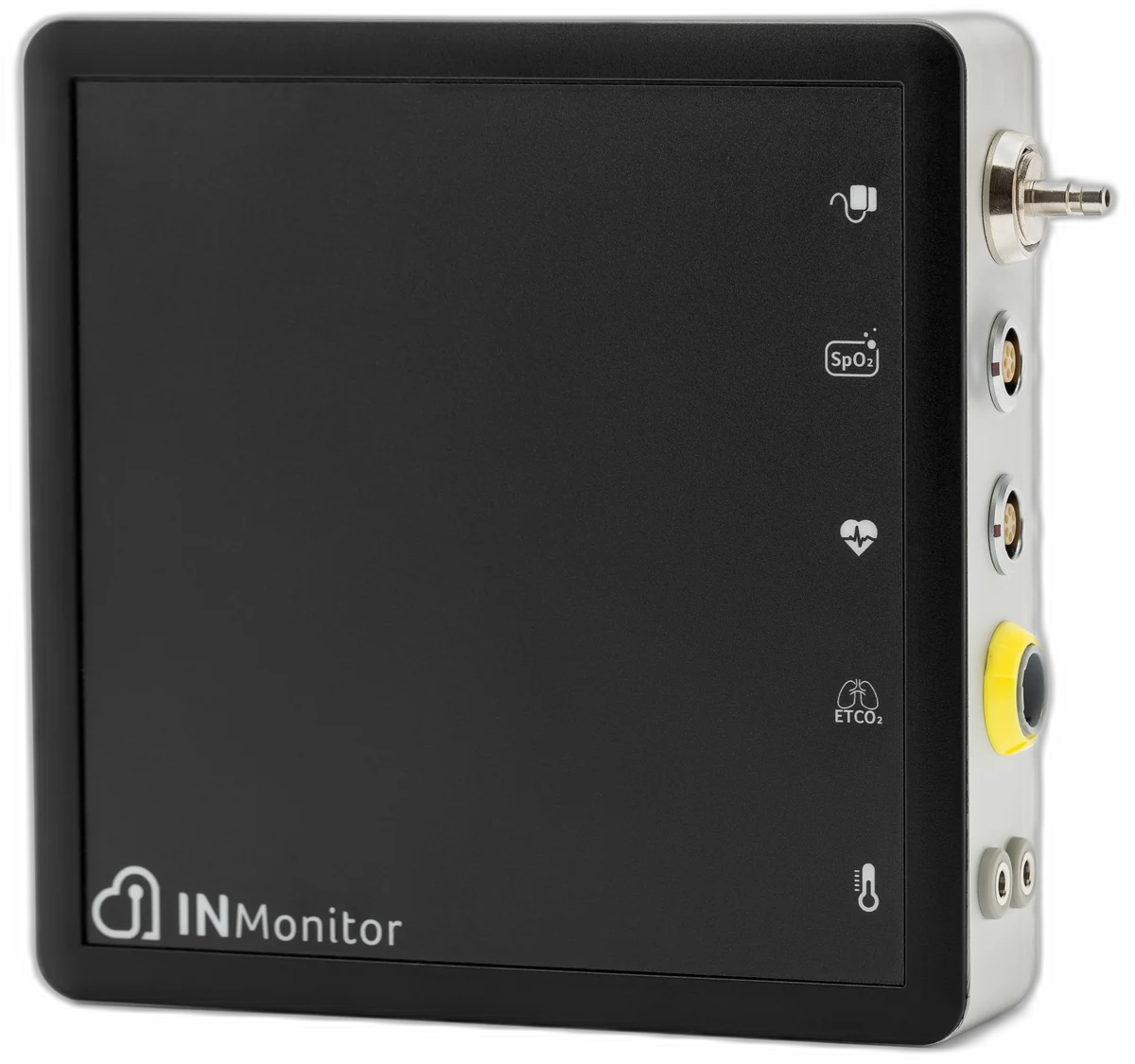
Veterinary multiparameter monitor that tracks ECG, NIBP, SpO₂, capnography and temperature live, with a digital anesthesia record that fills itself in and uploads to INcloud. The captured ECG can still go to a partner cardiologist report remotely.
106106
Multiparameter monitoring, on a single screen
Multiparameter monitoring tracks several vital signs at once, ECG, blood pressure (NIBP), oximetry (SpO₂), capnography (ETCO₂) and temperature, in a single connected device, aimed at surgery, anesthesia and inpatient care. At INpulse, the INmonitor brings these parameters together on one screen, with a digital anesthesia record that uploads to INcloud and tele-reporting of the captured ECG.
Five parameters, one screen
On a single screen, the INmonitor tracks five parameters live. Each one has its own reading range and resolution.
| Parameter | Range | Resolution |
|---|---|---|
| ECG | 1 to 7 leads | 0.3 µV |
| NIBP | 20 to 280 mmHg | 1 mmHg |
| SpO₂ | 0 to 100% | 1% |
| Temperature | 0 to 50 °C, 2 channels | 0.1 °C |
| ETCO₂ | 0 to 114 mmHg (optional) | 0.1 mmHg |
Capnography (ETCO₂) is an optional module, in the INcapno Main (mainstream) or INcapno Side (sidestream) version.
From parameters to report, connected
- 01 Live parameters ECG, NIBP, SpO₂, ETCO₂ and temperature, all on a single INmonitor screen.
- 02 Anesthetic sheet in INpulse One, the sheet fills itself in with every reading, from pre- to post-op.
- 03 INcloud the parameters and the sheet upload to the cloud, linked to the patient record.
- 04 ECG tele-reporting only the captured ECG goes to a partner cardiologist report remotely; NIBP, SpO₂, ETCO₂ and temperature stay in the cloud.
The monitoring tools
The connected monitor
Where monitoring comes in
- Surgical and anesthetic monitoring
- Inpatient care and the ICU
- Anesthetic risk assessment (ASA)
- Meeting CFMV monitoring requirements
- Capnography as an anesthesia safety standard
- Mobile and ambulatory care
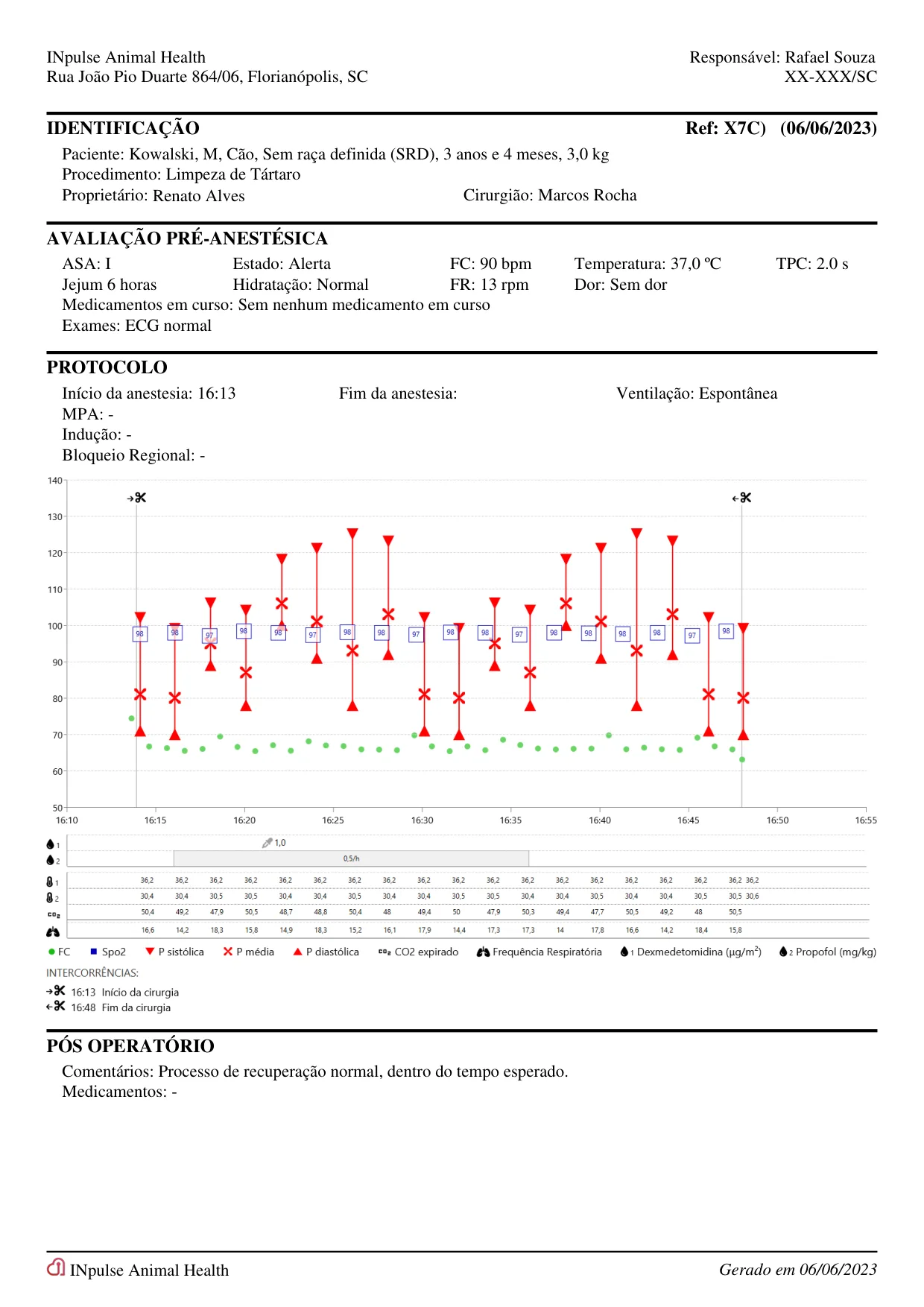
Monitor and chart: the anesthesia record fills itself
SpO₂, high-definition NIBP, ECG, temperature and capnography in one monitor. Every reading flows into the digital anesthesia record automatically, in real time.
10110 mm/s 10 mm/mV (N)
The finished anesthesia record, in PDF
Frequently asked questions
Which parameters should a veterinary multiparameter monitor track?
In anesthesia and intensive care, the usual parameters tracked are ECG (rhythm and heart rate), pulse oximetry (SpO₂), non-invasive blood pressure (NIBP), capnography (ETCO₂), temperature and respiratory rate. Together, these give a continuous picture of the patient’s cardiorespiratory status; INmonitor brings them all into a single connected device.
What is capnography and why monitor ETCO₂?
Capnography measures carbon dioxide in exhaled air and shows the value at the end of expiration, the ETCO₂. It is an indicator of the patient’s ventilation and perfusion: changes in ETCO₂ can signal hypoventilation, anesthetic circuit problems or hemodynamic changes, which is why it helps improve anesthesia safety. On INmonitor, capnography is an optional module.
What is the ASA anesthetic risk classification?
The ASA classification, created by the American Society of Anesthesiologists and also adopted in veterinary medicine, grades the patient’s physical status before anesthesia, from a healthy animal to a severely ill patient, helping to estimate risk and plan monitoring. The higher the category, the more careful the monitoring of vital signs during the procedure. Assigning the category is the responsibility of the attending veterinarian.
Is anesthetic monitoring required? (CFMV)
Veterinary anesthesia in Brazil is regulated by the Federal Council of Veterinary Medicine (CFMV), which calls for tracking vital parameters during anesthetic procedures as part of good practice. Always check the current CFMV and regional council resolutions; the conduct is up to the veterinarian responsible for the procedure.
Go deeper
- Is Anesthetic Monitoring Mandatory? What the Standards Say and Why It Protects Both Patient and Practice
- ACVAA 2025 Anesthetic Monitoring Guidelines for Small Animals: What Changes in Practice
- Digital Anesthesia Record: The Value of Continuous Monitoring Documentation in Veterinary Anesthesia
- Capnography (ETCO2) in veterinary anesthesia: how to read the capnogram waveform
- Normal ETCO2 and SpO2 values in dogs and cats under anesthesia: what each parameter detects
- Surgical Risk: the ASA classification in veterinary medicine
Start monitoring, connected
From anesthesia to inpatient care, with the sheet in the cloud and the ECG ready for reporting.
See frequently asked questions